#Product Trends
The Mechanics of the Viking and Odin Systems
Engineering for Stability: The Mechanics of the Viking and Odin Systems
In professional maritime circles, the effectiveness of ground tackle is defined by its ability to remain set under dynamic loads. While many designs focus on initial burial through tip-weight, modern naval architecture emphasizes the role of geometric stability, precise attack angles, and high-performance metallurgy.
Both the Viking and Odin anchors are engineered with a specific focus on the relationship between the fluke and the direction of pull, utilizing advanced materials to achieve maximum holding power without the need for dead-weight ballast.
1. The 33° Constant: Optimized for Substrate Resistance
The holding power of an anchor is fundamentally determined by the angle of the fluke relative to the pulling direction. While different seabed viscosities—ranging from soft silt to hard-packed sand—theoretically respond best to angles between 30° and 40°, both the Viking and Odin models utilize a precision-set 33° angle.
Attack Geometry: This 33° angle is the "sweet spot" for versatile performance. It provides the necessary pressure to penetrate high-viscosity, hard bottoms while maintaining enough surface resistance to hold in lower-viscosity substrates.
Deep Burial: By maintaining this 33° constant to the shackle hole, the anchor is forced to "dive" deeper as tension increases, preventing it from planing toward the surface under extreme loads.
2. The "Vertical Fluke" Concept: The Odin Evolution
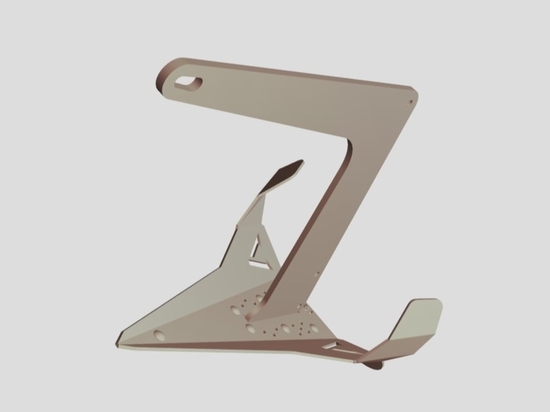
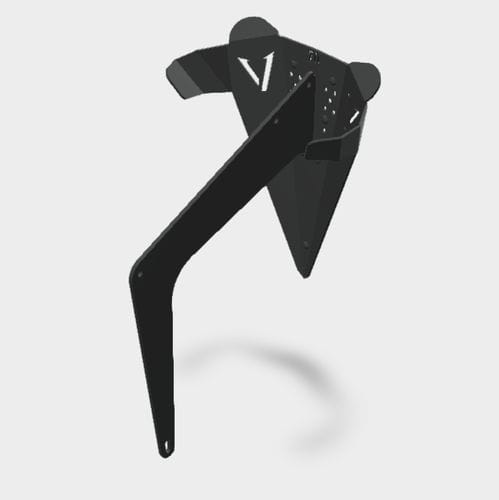
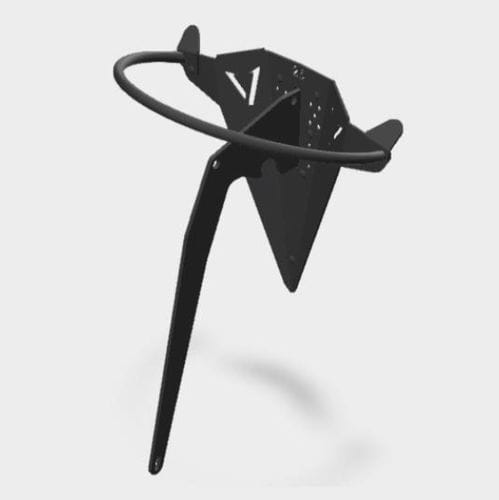
While the Viking and Odin share this 33° attack angle, the Odin introduces secondary stabilizers designed to act as a vertical fluke. This is a critical distinction for vessels operating in areas with frequent wind and current shifts.
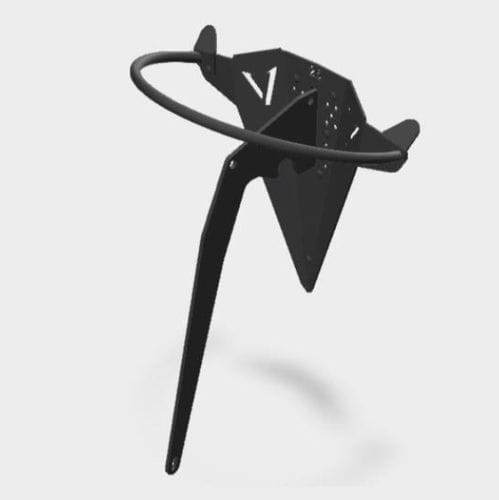
High-Profile Shank: Unlike standard low-profile shanks that can slice through the seabed sideways, the Odin’s shank provides a significant vertical surface area. This acts as a lateral brake, resisting the "walking" effect during a 180° swing.
Vertical Wings: These stabilizers provide resistance on the vertical plane. They ensure the anchor remains upright and buried longer during a rotation, preventing the fluke from rolling out of the substrate when the direction of pull changes.
3. Metallurgy: The Hardox 450 HT Advantage
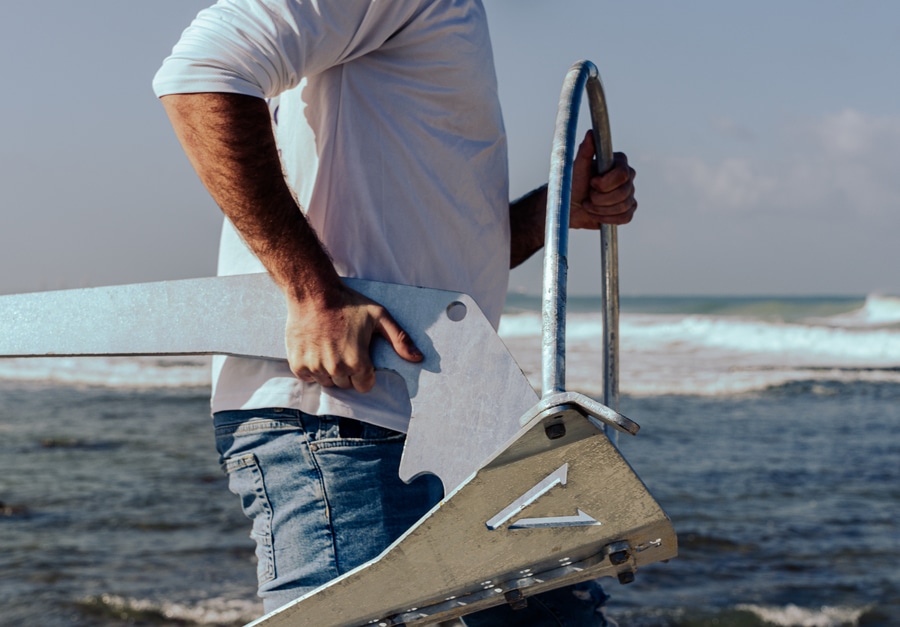
A high-performance design is only as reliable as the material from which it is constructed. Both the Viking and Odin designs utilize Hardox 450 HT (High Tensile) steel. This choice of material is a primary reason these anchors can outperform ballasted competitors.
Strength-to-Weight Ratio: Hardox 450 HT is an abrasion-resistant steel with high yield strength. Using this material allows for a thinner, sharper fluke and a streamlined shank that can withstand extreme lateral loads without bending or deforming.
Monolithic Construction: Because this steel is so robust, it eliminates the need for the hollow cavities or lead-poured toes found in ballasted anchors. Every kilogram of the Viking and Odin is structural and functional.
Durability: The high hardness of the 450 HT grade ensures that the sharp penetrating tip maintains its edge over years of deployment in abrasive substrates like coral sand or gravel.
4. Monolithic Integrity vs. Ballasted Designs
There is a fundamental difference between mass-driven and geometry-driven anchors. Ballasted anchors rely on lead or heavy inserts in the toe to force an initial set. In contrast, the Viking and Odin utilize monolithic construction.
Functional Mass: Every kilogram of these anchors is structural and load-bearing. There is no "dead weight" ballast. This allows for a larger fluke surface area for the same total weight as a ballasted competitor.
Structural Reliability: Solid steel construction avoids the risk of internal corrosion or shifting centers of gravity that can occur in composite, ballasted designs.
Active Resetting: By relying on the instability of its own geometry to "trip" and reset, these designs provide a more predictable response during a shift than designs that rely purely on gravity or passive tip-weight.
Technical Summary: Viking and Odin Systems
Feature Viking / Odin Specification Operational Impact
Material Hardox 450 HT (High Tensile) : Maximum strength-to-weight ratio and durability
Attack Angle Precision 33° to the pulling direction Optimized for 30° to 40° seabed viscosity range
Vertical Surface High-profile shank + Wings (Odin) Acts as a "Vertical Fluke" to prevent walking
Material Use 100% Structural (Solid Steel) Maximum holding-power-to-weight ratio
Construction Monolithic (No hollow cavities) High resistance to lateral deformation
The shift toward geometry-driven anchoring represents a more sophisticated understanding of seabed physics. By combining a precision 33° attack angle with the lateral stability of the "vertical fluke" concept and the immense strength of Hardox 450 HT steel, the Odin and Viking systems ensure that the anchor stays in the seabed longer and resets faster when conditions are at their worst.
https://youtube.com/shorts/9VKO-dOkpe8?si=5mU_ysM8vd7w2Z4K
https://youtube.com/shorts/t-EOC2HerCg?si=gzE8722E5d5U5Ap5