
#Industry News
How Ultrafiltration and Reverse Osmosis Perform Against PFAS “Forever Chemicals
A clear guide for marine installations: Understanding the differences between Ultrafiltration (UF) and Reverse Osmosis (RO), especially their ability to remove Per‑ and Polyfluoroalkyl Substances (PFAS) — so you can specify the right system on board.
In the nautical world, space, efficiency, and safety are everything. As yachts and vessels become more autonomous and eco-conscious, water treatment systems must not only deliver pristine water but also protect against emerging contaminants. Among these, PFAS — the so-called “forever chemicals” — have become a key concern. Understanding how Ultrafiltration (UF) and Reverse Osmosis (RO) perform against PFAS is crucial when specifying filtration systems for marine applications.
What Are PFAS and Why Are They a Concern?
PFAS (Per- and Polyfluoroalkyl Substances) are a large group of man-made chemicals used in non-stick coatings, textiles, fire-fighting foams, and countless industrial processes. They are extremely resistant to heat, water, and oil — and, unfortunately, to natural degradation. Their strong carbon-fluorine bonds make them highly persistent in the environment and very difficult to remove once they enter water systems.
PFAS can accumulate in groundwater and surface water, and have been detected in marine environments worldwide. Long-term exposure is associated with various health risks, including effects on the immune system, cholesterol levels, and hormonal balance. For yacht owners and ship operators, ensuring that drinking water systems are capable of removing PFAS is an important step toward crew safety and environmental responsibility.
UF vs RO: Two Membrane Technologies, Two Purposes
Ultrafiltration (UF) and Reverse Osmosis (RO) are both membrane-based water purification processes, but they work at very different scales.
Ultrafiltration uses membranes with pores around 0.01–0.1 microns — large enough to let dissolved minerals and small molecules pass, while retaining bacteria, viruses, and suspended solids. It’s ideal for removing turbidity, microorganisms, and colloids, often used as a pretreatment before finer filtration steps.
Reverse Osmosis, by contrast, operates on a much tighter level. Its membrane pores are roughly 0.0001 microns — capable of rejecting not only microorganisms, but also dissolved salts, heavy metals, and organic molecules. RO is the only membrane process that can significantly reduce total dissolved solids and contaminants at the molecular level, including PFAS.
In short: UF clarifies the water; RO purifies it.
PFAS Removal: Why RO Is Essential
PFAS molecules are extremely small and water-soluble, meaning they pass through most conventional filters — including UF membranes — without resistance. While UF excels at removing particulates and pathogens, its pore size is far too large to capture PFAS compounds.
Reverse Osmosis, however, provides a molecular-level barrier. Studies consistently show that RO membranes can remove over 90% of PFAS, including both long-chain and short-chain compounds. The mechanism combines size exclusion with electrostatic and hydrophobic interactions that trap PFAS molecules at the membrane surface, preventing them from passing into the treated water.
In practice, this makes RO the most effective point-of-use or onboard treatment technology available today for PFAS reduction. When properly installed and maintained, it delivers water that is both safe and free from taste or odour issues, even in areas where PFAS contamination may exist.
Why It Matters On Board
On yachts and vessels, water can come from various sources — municipal, dockside, desalinated seawater, or stored tanks. Each carries different contamination risks. When PFAS are present, only a system equipped with a Reverse Osmosis stage can guarantee significant reduction.
For marine applications, this has several implications:
UF systems are excellent as a first stage to protect downstream components and remove sediment, but they cannot be relied upon for PFAS protection.
RO systems deliver complete purification, removing PFAS, microplastics, heavy metals, and salts — ensuring the highest quality drinking water on board.
The ideal configuration for yachts combines both: UF for pretreatment (reducing fouling and extending membrane life), followed by RO for final purification.
Energy and Maintenance Considerations
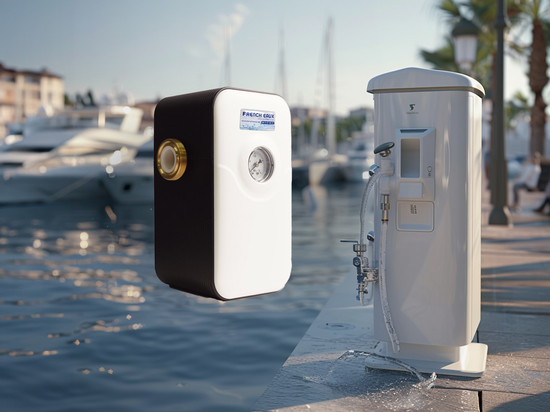
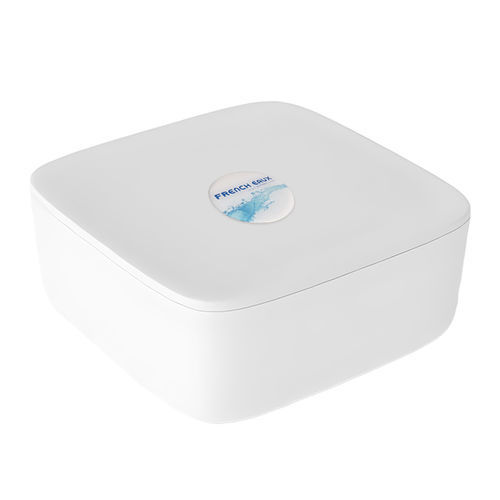
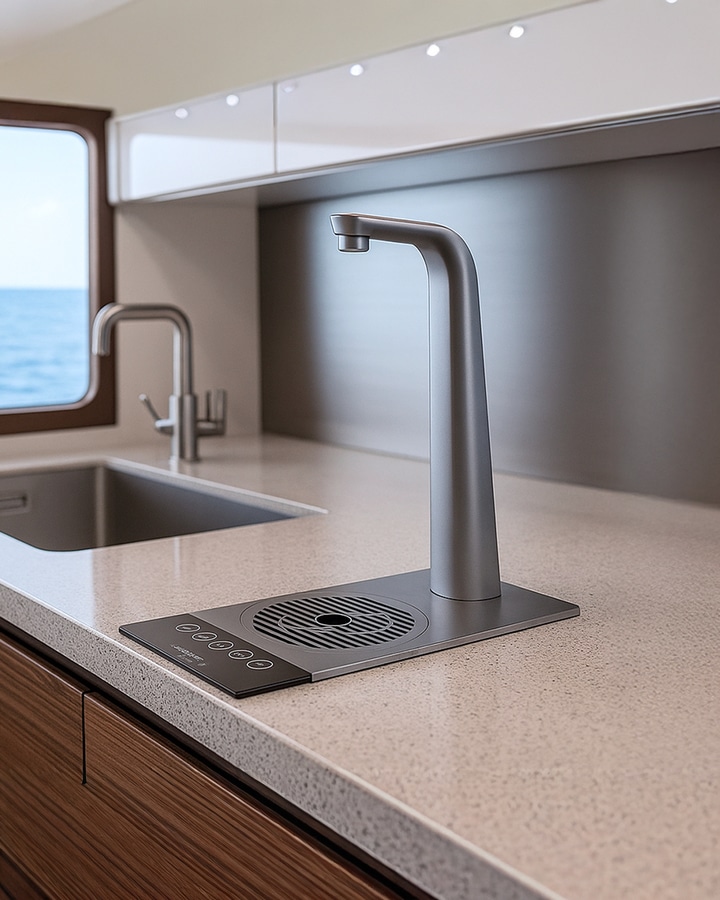
While RO systems require higher pressure and more energy than UF systems, advances in membrane design and energy recovery have made marine RO units far more efficient and compact. For instance, French Eaux’s OneZero osmosis unit uses a non-electric design — an innovation that combines high performance with minimal footprint and energy use, ideal for onboard environments where power and space are at a premium.
Regular maintenance remains essential. Cleaning and replacing membranes at recommended intervals ensures consistent rejection rates and prevents PFAS breakthrough, especially when operating in variable temperature or salinity conditions.
The Future of Water Quality at Sea
PFAS regulation is tightening globally, and awareness among yacht owners, captains, and shipyards is growing fast. Selecting a filtration system that already meets the highest purification standards positions vessels to comply with future requirements — and demonstrates a real commitment to ocean stewardship.
In a world where “forever chemicals” are increasingly under scrutiny, Reverse Osmosis represents the most robust line of defence for drinking water safety. Combined with efficient pretreatment and sustainable filtration strategies, it ensures that life at sea remains not only luxurious, but also clean, responsible, and forward-thinking.