
#Industry News
Beyond the Bottle: How On-Board Filtration Systems Are Ending Single-Use Plastic Water on Yachts
Exploring the hidden scale of plastic-water-bottle consumption at sea – and how systems like the OneZero, Oceane fountain and U4/U5 taps transform water-supply strategy on board.
For yacht owners, captains and naval architects, there’s a growing imperative: eliminate single-use plastic water bottles on board. While they might seem a small convenience, the cumulative impact of bottled-water consumption at sea is far greater than most imagine. At the same time, advanced compact water-filtration and dispensing systems now make it both feasible and profitable to remove plastic bottles entirely. This article quantifies the scale of the issue, and explains how French Eaux’s marine-grade solutions (the OneZero osmosis unit, the Oceane fountain, the U4 and U5 taps) deliver drinking water on board that is safe, fresh, convenient — and plastic-free.
Plastic-Bottle Use on Board: The Hidden Figures
The broader global figures for plastic bottles are staggering: worldwide sales of plastic water and beverage bottles run into billions each year — one report even estimated that about one million plastic bottles are sold every minute.
For the marine sector, the numbers may appear smaller but are still meaningful. A survey of 132 yachts found that almost 10% of those vessels estimated annual bottled-water use of over 10,000 litres, and nearly 19% between 5,000 and 10,000 litres. On a single yacht, that corresponds to tens of thousands of half-litre bottles each year.
In commercial shipping, a 2021 survey for BIMCO estimated between 540 million and 1.08 billion single-use PET water bottles are used annually on board merchant ships – reinforcing that vessels are significant consumers of bottled water.
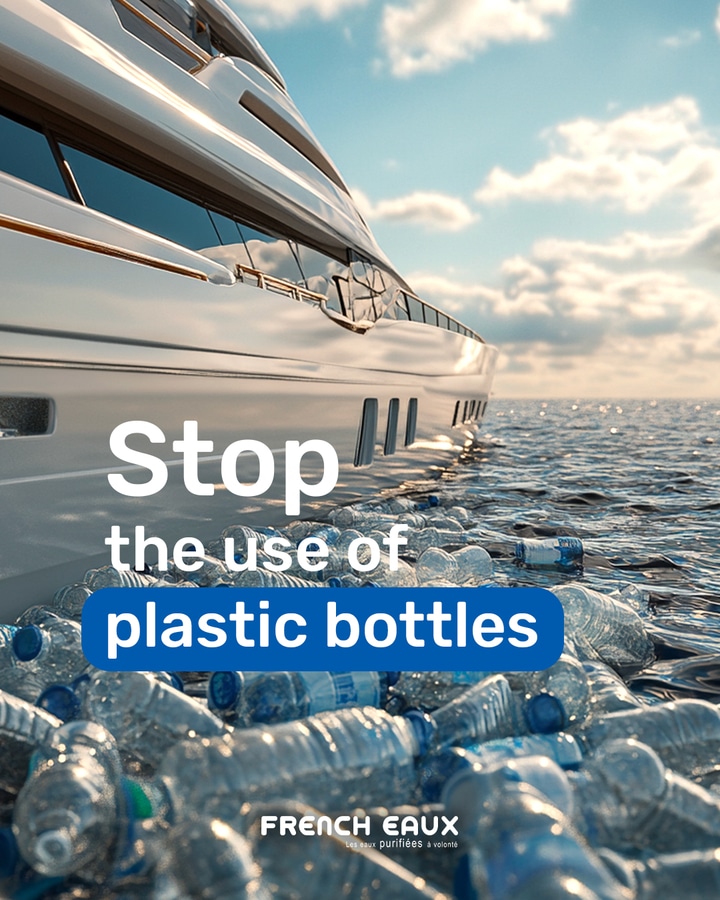
The implications for yachts are clear: even moderate-sized vessels may be consuming thousands of plastic bottles annually, entailing not only waste logistics (storage, disposal) but also cost, weight and reputational risk (given the increasing focus on plastics in oceans).
Why Bottled Water on Board Persists
Why do yachts still rely heavily on bottled water? Key reasons include:
Guests and owners often perceive bottled water as “premium” or “safer” than tap/fountain water on board.
Cold-storage convenience: bottled water can be pre-chilled and placed in guest fridges or the tender.
Simplicity of logistics: bottles are distributable, replaceable and familiar.
Infrastructure limitations: older vessels may lack on-board dispensers or appropriate filtration to instill confidence.
However, as filtration technologies evolve and sustainability becomes a priority, continuing to rely on bottles is increasingly seen as a missed opportunity.
Enter On-Board Filtration & Dispensing: The Plastic Bottle Solution
Here’s how French Eaux’s solutions address the bottled-water challenge:
1. The OneZero Osmosis Unit
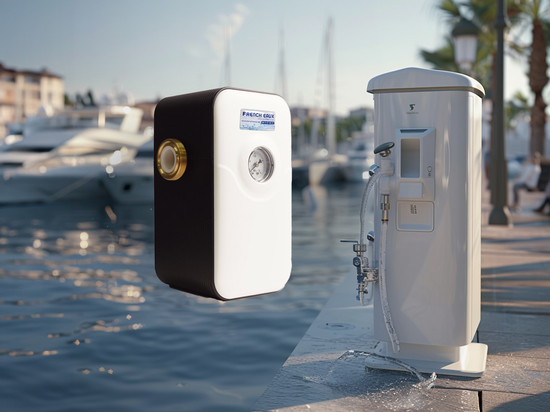
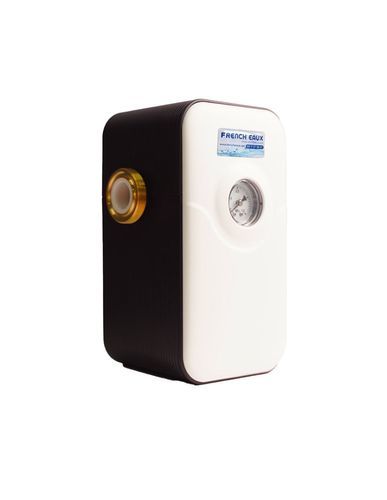
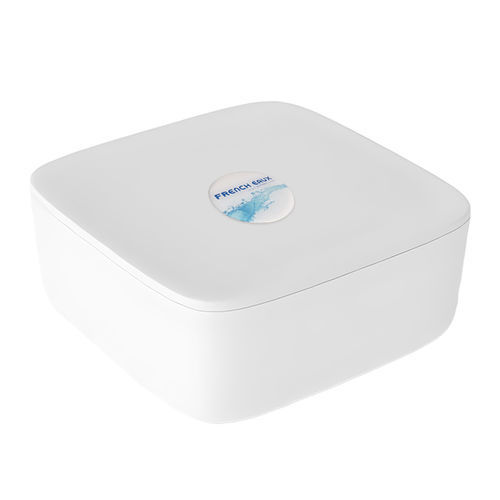
This compact reverse-osmosis system is designed for marine installation — bringing purified water production on board, meaning fresh drinking water is available directly from the vessel’s supply without reliance on pre-bottled water shipments. By installing OneZero, a yacht drastically cuts the number of plastic bottles required.
2. The Oceane Fountain
For guest spaces, salons or pool decks, the Oceane fountain offers ambient-temp, chilled and sparkling water on demand. Rather than offering bottled sparkling water in the tender, crew can dispense from a built-in fountain — significantly reducing bottle procurement, refrigeration needs and waste.
3. The U4 and U5 Taps
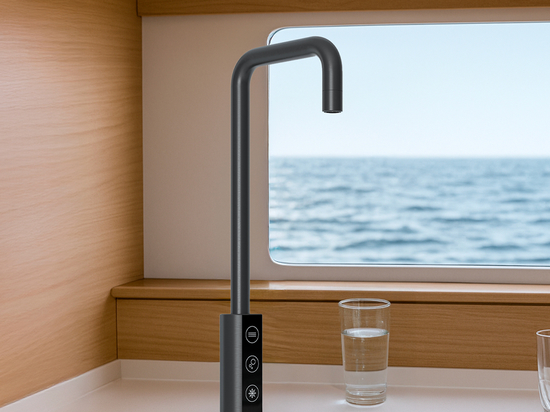
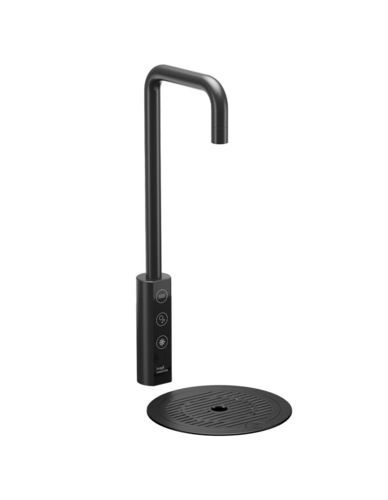
The U4 and U5 taps integrate seamlessly into countertops or cabin galleys, delivering hot, chilled or ambient filtered water directly to the user. This means crew and guests can fill reusable bottles, flutes or glasses instantly — again bypassing single-use plastic bottles.
Together, these systems create a “bottle-free water supply chain” on board: water from the vessel supply → high-grade filtration/purification → chilled/ambient/sparkling dispensed via fountains or integrated taps → reusable containers or glassware. The result: significantly fewer plastic bottles purchased, transported, stored, cooled and disposed.
Quantifying the Impact on a Yacht
Let’s take a hypothetical example: a charter yacht typically purchases 5,000 litres of bottled water per year (which one survey found to be a common mid-range figure). At 0.5 litre per bottle, that equals about 10,000 plastic bottles per year.
Switching to an on-board system means those bottles are no longer required – saving:
The cost of purchasing and transporting the bottles.
Space in stores or fridges previously dedicated to bottles.
Weight (empty bottles + transport) which is a real logistic on board.
Plastic-waste management duties: sorting, compacting, disposing or shipping off.
Reputation and sustainability footprint: fewer single-use plastics means fewer environmental-impact concerns (and fewer potential regulatory/charter-fleet issues).
Moreover, reusable stainless-steel or glass bottles become standard for guests and crew — further extending the “no single-use plastic bottle” policy.
Strategic Benefits for Owners, Captains & Brokers
Guest experience: Fresh-tasting, chilled, sparkling water on demand gives a premium feel — and shows an eco-conscious brand.
Operational efficiency: Removing the need for bottled-water deliveries simplifies provisioning, reduces logistic burden and fridge space requirements.
Sustainability credentials: As the yachting industry increasingly adopts plastic-reduction targets, being bottle-free is becoming a differentiator.
Cost-effectiveness: Though upfront investment in filtration/dispensing equipment is required, over the vessel’s lifetime the savings from avoiding bottled-water procurement pay back.
Regulatory readiness: With maritime guidelines and marine-waste regulations tightening, having an on-board system positions the vessel ahead of compliance curves.
Implementation Tips & Best Practice
Pilot the system in a guest area (fountain + reusable bottles) and measure reduction in bottled-water orders.
Train crew to promote the filtered on-board water as the “premium” offering and phase out bottled-water options in guest zones.
Use visible signage (e.g., “Enjoy chilled sparkling water from our on-board Oceane fountain – zero single-use plastic”) to change guest mindset.
Maintain the filtration & dispensing systems diligently (membrane checks, hygiene cleaning) to ensure excellent taste and performance — trust in the system is key.
Track metrics: litres dispensed on-board vs bottled water saved; bottles avoided per year = communications and sustainability data you can report.
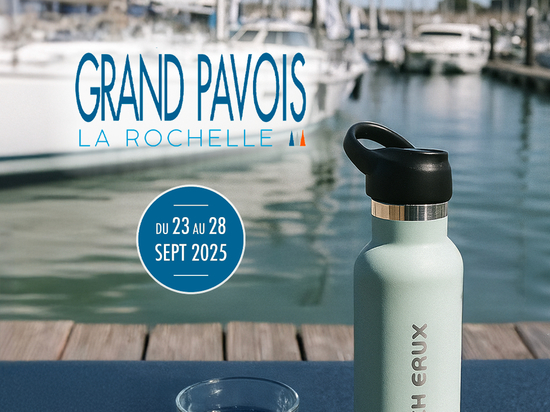
Consider providing branded reusable bottles for guests and crew, reinforcing the message and reducing the temptation of single-use options.
Conclusion
In the age of environmental awareness, single-use plastic water bottles on board a yacht are no longer simply “convenient” — they are a liability: logistic, financial, reputational and ecological. By implementing a full-featured on-board filtration and dispensing infrastructure (as provided by French Eaux’s OneZero, Oceane, U4 and U5 systems), vessels can confidently transition to a plastic-free hydration model. The benefits are clear: fewer bottles, less waste, enhanced guest experience and a stronger sustainability story. For yachts today, the future of drinking water is clean, well-engineered and single-use-bottle-free.