#Product Trends
Joystick Applications in the Marine Industry
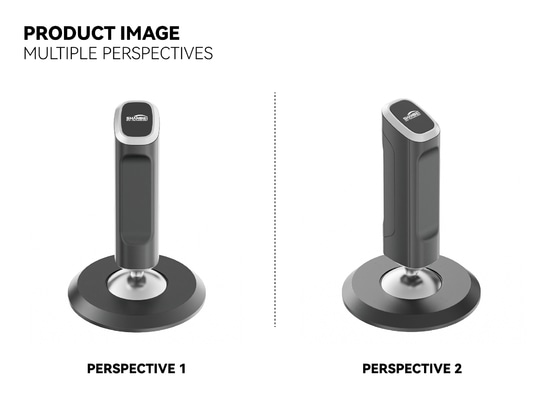
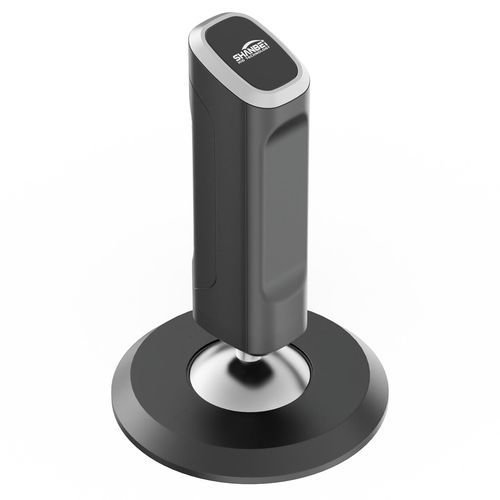
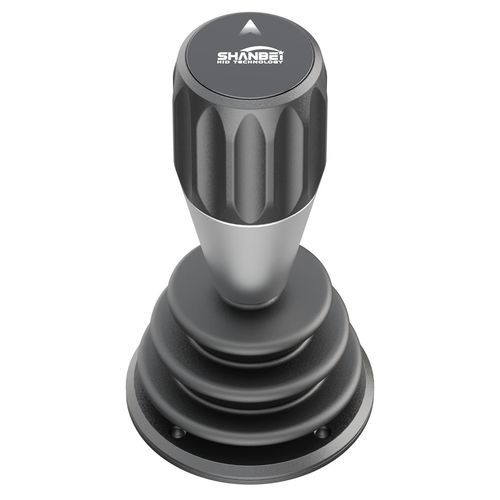
The joystick is evolving from an auxiliary control device into the core human–ship interface for intent transfer, moving toward steer-by-wire, intelligent, and wireless solutions.
I. Core Positioning
1.Evolution: from auxiliary handle to core interface for coordinated multi-thruster control.
2.Function: translates operator intent into coordinated thruster commands, simplifying berthing, confined-water maneuvering, and dynamic positioning (DP) operations.
II. Key Application Scenarios
1.Berthing and confined waters: single-lever control of surge, sway, and yaw; enables lateral translation and pivot turns.
2.Dynamic positioning (DP): combined joystick control and Independent Joystick System (IJS); provides backup control if DP fails.
3.Offshore construction and subsea operations: used for offshore wind installation, pipelay, and subsea work; supports force control, station keeping, and centimeter-level positioning.
4.Yachts and recreational craft: berthing assistance for single- and twin-engine vessels; automatically compensates for wind, wave, and current.
5.Wireless remote control: tugs, workboats, and yachts; remote operation within approximately 1,000 m.
III. Technical Essentials
1.Sensing: potentiometer → Hall-effect/TMR; non-contact, long service life, redundant outputs.
2.Safety: dual sensors and dual channels; IJS independent of the DP system; compliant with SOLAS and classification society rules.
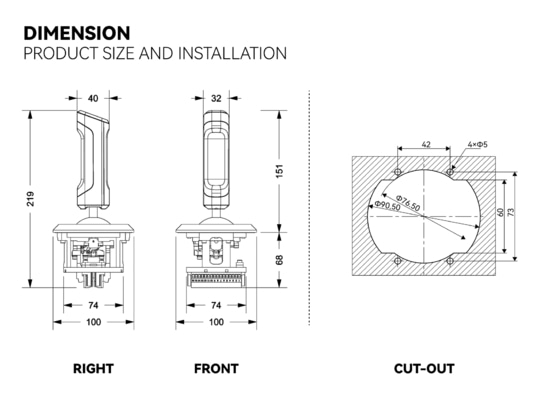
3.Integration: ergonomic design, multi-joystick expansion, CAN bus, low-latency communication.
IV. Market Landscape
1.Market size: global marine joystick market approximately RMB 1.01 billion in 2025; projected to reach RMB 1.659 billion by 2032, with a CAGR of about 7.4%.
2.Competition: dominated by international majors; Volvo Penta holds approximately 22% share, with the top three accounting for over 48%; Chinese manufacturers are accelerating market penetration, e.g., Ningbo Fanbei and Shenzhen Xiaolong.
V. Trends
1.Steer-by-wire: replacing mechanical/hydraulic steering.
2.Intelligence: autonomous collision avoidance, remote operation, and multi-vessel cooperation.
3.Wireless: portable control, improving visibility during berthing and operational safety.