#Product Trends
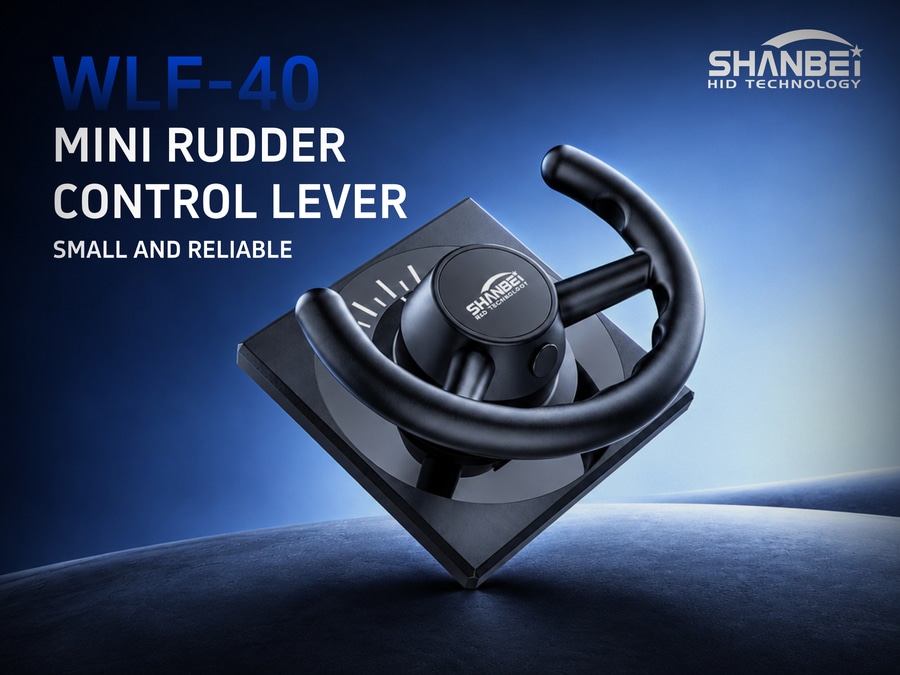
Application Background of the Mini Rudder Control Lever
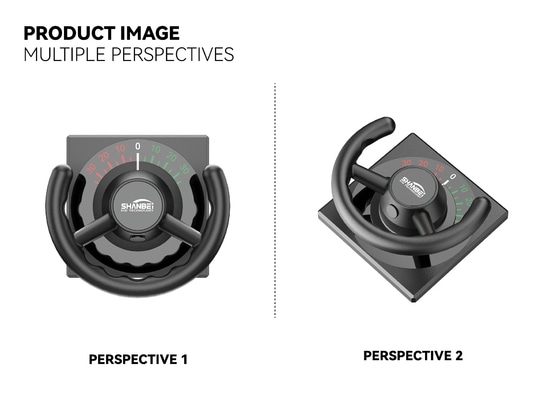
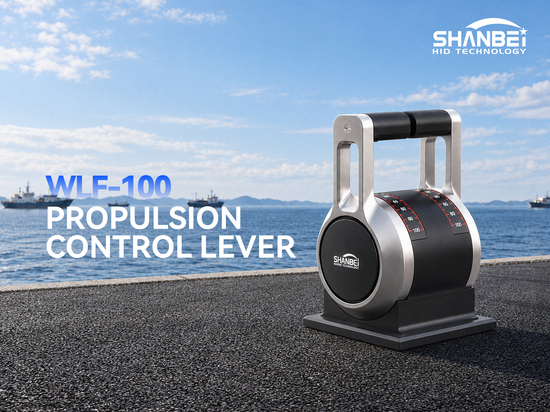
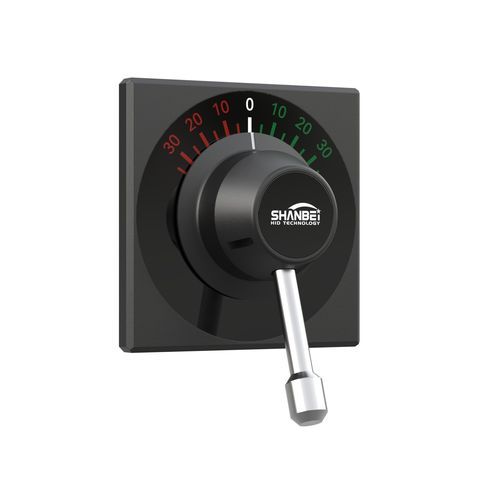
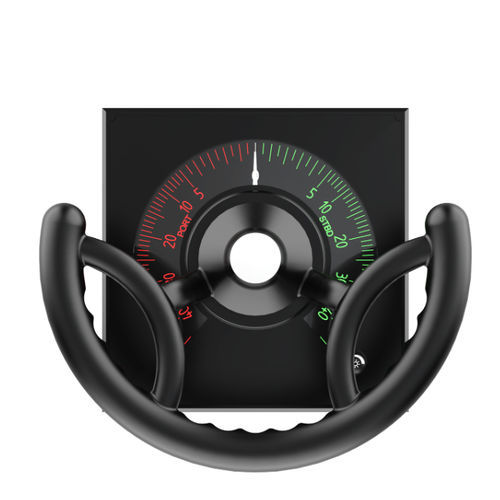
The rudder control lever is shifting from a mechanical, leverage-based device to an electronic command terminal that conveys steering intent. Its size is now driven less by mechanical needs than by bridge/wheelhouse space and control scenarios.
I. Technical Prerequisites: Power Steering and Steer-by-Wire Remove Dimensional Constraints
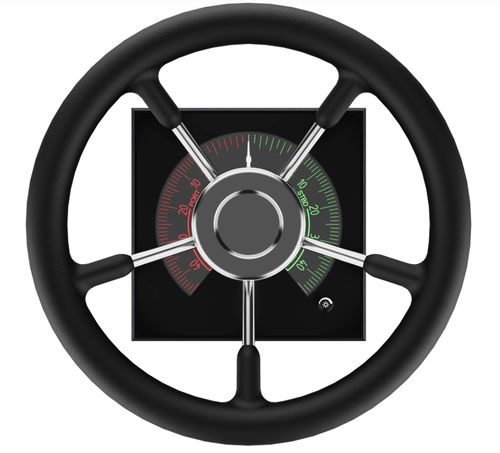
1.Conventional large steering wheels relied on a long lever arm to counteract rudder hydrodynamic load; size was primarily a mechanical requirement.
2.With the widespread adoption of hydraulic/electric power steering, steering effort is reduced, providing room for downsizing the rudder control lever.
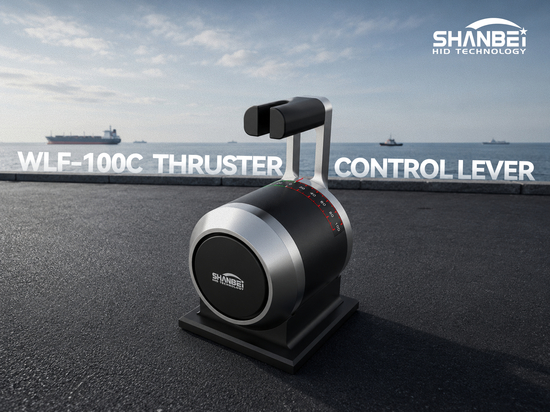
3.Steer-by-wire enables the rudder control lever to output only electrical signals and eliminates mechanical coupling with the steering gear, further releasing its form and dimensions.
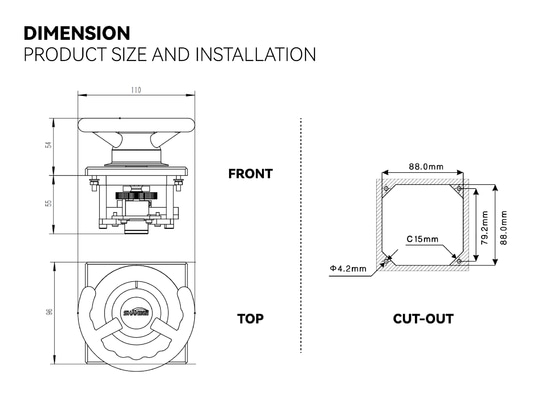
4.Typical configuration: low-profile panel-mounted installation, outputting standard potentiometer signals, current signals, or bus signals, with environmental protection suitable for bridge installation.
II. Small Vessels: Bridge Space Drives Compactness
1.The wheelhouses of yachts, speedboats, and workboats are confined; a large steering wheel encroaches on console and passage space.
2.Modern consoles also need to integrate instrumentation, displays, propulsion, and communication equipment, intensifying panel space constraints.
3.The value of the mini rudder control lever lies in “compressing” the steering function out of the panel, allowing navigation and propulsion controls to coexist within limited console space.
III. Large Vessels: Berthing and Fine Maneuvering Create Demand for a “Second Small Rudder Control Lever”
1.Main steering wheels have become more compact due to power assistance, but berthing and unberthing still require fine steering control at bridge wings and side observation stations.
2.These locations are too confined for conventional main steering wheels, yet require a readily accessible device for precise rudder adjustment.
3.The mini rudder control lever therefore serves as a scenario-adapted interface within a multi-station control architecture, rather than a simple replacement for the main steering wheel.