
#Industry News
Lightweight Marine Mini Rudder Control Lever: Technical Characteristics and Evolutionary Analysis
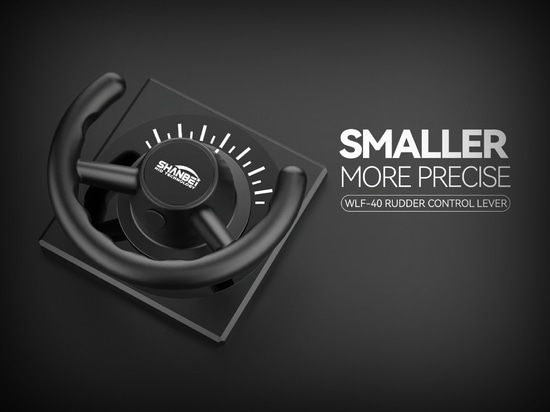
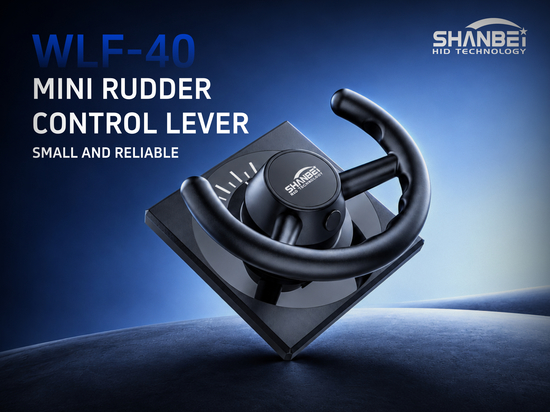
Its core lies in "lightweight" and "precision," yet it also brings new challenges to design and operation.
1. Operating Principle: The Shift to Electronic Control
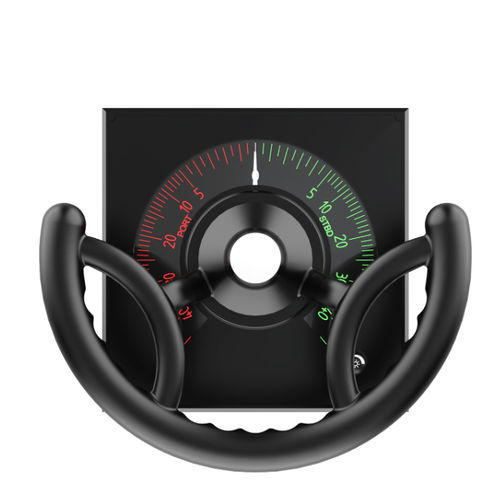
1)In essence, the device has evolved into a command input terminal for ship course control. Its operational chain is: manual rotation of the handle generates voltage or digitally encoded signals, which are transmitted via communication media such as the CAN bus to the steering gear, causing the rudder blade to deflect to a certain angle, and thereby altering the vessel's heading through hydrodynamic forces. Hydraulic assistance and electric servo technology underpin its precise and low-effort steering performance.
-------------
2. Application Benefits: Dual Optimisation of Space and Function
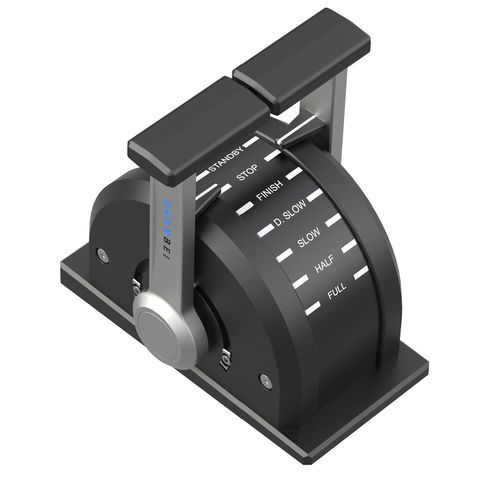
1)Its compact design, typically with a thickness of less than 10 cm, significantly improves the spatial efficiency of cramped wheelhouse layouts.
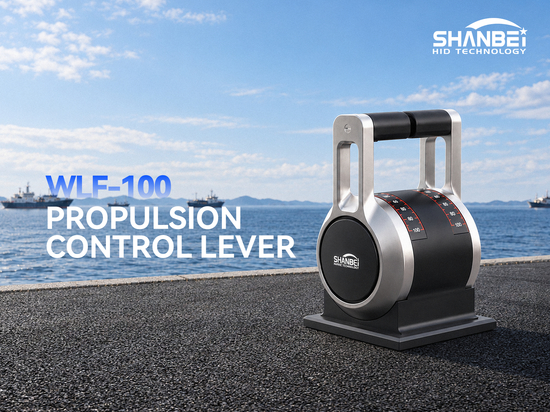
2)Some highly integrated models enable coupled control of propeller speed (or thrust) and rudder angle, allowing the operator to issue both thrust and steering commands simultaneously through push‑pull and rotary movements of the same lever.
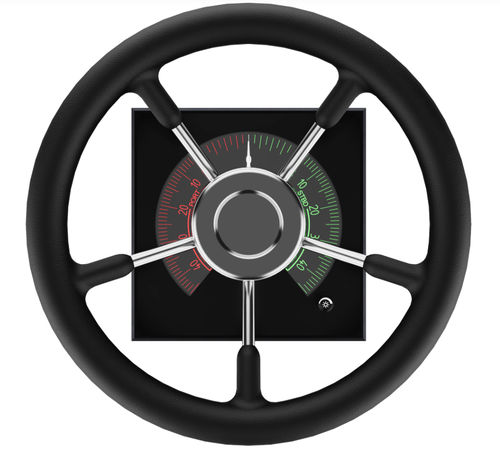
3)In terms of materials, high‑strength engineering plastics and aluminium alloys are widely used, combined with modular assembly, resulting in an overall weight reduction of more than 50% compared with conventional rudder control wheels.
-------------
3. Engineering Limitations and Human‑Factors Considerations
1)Visual recognition difficulties: The miniaturised indicator panels increase the difficulty of reading navigational data, and frequent ocular accommodation tends to induce visual fatigue.
2)Restricted fine manoeuvring: The limited torque feel and short travel stroke hamper the ability to perform smooth, precise course corrections under adverse sea conditions.
3)Sensitivity to environmental disturbances: When the hull rolls, involuntary body movements of the helmsman may be transmitted to the control lever, leading to unintended rudder angle commands.
4)Inadequate ergonomic comfort: In some models, the grip position and horizontal angle deviate from optimal anthropometric design, potentially causing noticeable musculoskeletal strain during prolonged duty periods.
-------------
4. Technology Outlook: Integrated Propulsion‑Steering Systems
1)The future direction focuses on propulsion‑steering integration technology, where the electric motor, propeller and rudder blade are combined into a compact outboard (or pod‑type) drive unit, eliminating the traditional shafting arrangement. This approach not only further reduces the overall weight and frees up internal hull volume, but also endows the vessel with true 360° in‑place turning capability, substantially enhancing manoeuvrability and operational flexibility.