#Industry News
Where the Tactile Feedback of a Propulsion Control Lever Comes From
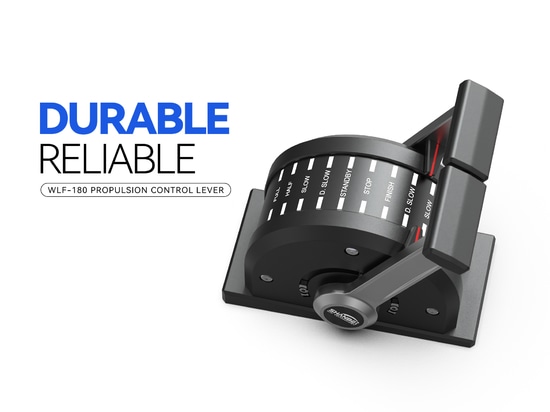
The pure electronic lever is simulated to have a tactile feel through an independent mechanical mechanism.
1. Neutral Detent – The Sensation of Positive Engagement
1)How it works: A spring-loaded roller is pressed firmly into the bottom of a V‑groove on the lever shaft.
2)What it feels like: A distinct “click” locking sensation in the neutral position. Deliberate force is required to push the lever out of neutral; releasing it causes the lever to snap back to mid‑position automatically.
3)Purpose: Gives the operator absolute confirmation that the propulsion system has been disengaged from power, preventing accidental movement.
--------------------
2. Start‑Notch Detent – A Resistance Barrier
1)How it works: A higher cam lobe or a second strong spring detent is positioned just beyond the exit of the V‑groove.
2)What it feels like: Immediately after moving out of neutral, the operator encounters a second distinct resistance point.
3)Purpose: Forces a clear distinction between the “starting program zone” and the “throttle zone”. The operator must perform a deliberate “override” action to push through this barrier, preventing accidental full‑ahead or full‑astern commands.
--------------------
3. Friction Damping – A Sense of Steadiness
1)How it works: An adjustable friction pad continuously grips the lever shaft.
2)What it feels like: Uniform, steady resistance throughout the entire travel range; no looseness or wobble.
3)Purpose: Eliminates mechanical backlash and allows precise fine adjustments. The lever stays exactly where it is set, unaffected by vessel motion or vibration.