#Product Trends
Four Application Backgrounds of Marine Azimuth Control Levers
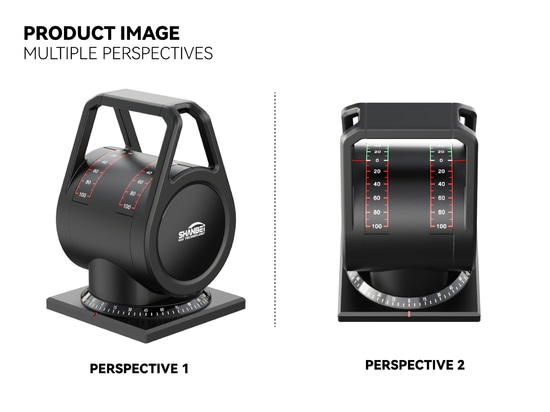
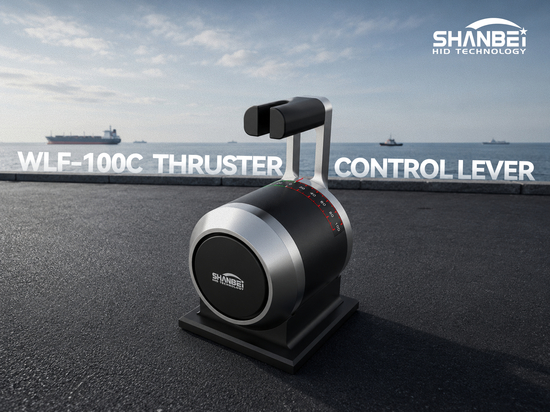
As azimuth thrusters become increasingly versatile, the manual control interface remains the ultimate bottleneck. The Azimuth Control Lever is the essential gateway to fully realizing the vessel's maneuverability.
I. Market and Equipment Aspect: Rapid Advancement of Thruster Capabilities
1.Market Scale: With surging demand for Wind Turbine Installation Vessels (WTIVs), tugs, and Offshore Support Vessels (OSVs), azimuth thrusters have become standard equipment (the broad market size is projected to reach nearly 4.1 billion RMB by 2026).
2.Hardware Upgrade: Technologies such as 360-degree omnidirectional rotation, Permanent Magnet (PM) motors, and vector control have made thrusters highly versatile.
3.Pain Point: Regardless of how powerful the hardware is, it must ultimately be actuated by a single hand on the bridge. A gap exists between hardware capability and the manual control interface (HMI).
II. Personnel and Operational Aspect: The Inevitable Shift from "Multi-lever" to "Single-lever"
1.Traditional Mode: Historically, tugs were operated using four levers (two for thrust direction and two for engine RPM), relying heavily on the decade-long experience of veteran crews.
2.Industry Status: With the current global shortage of qualified seafarers, such high-threshold operational methods are no longer sustainable.
3.Evolution Requirement: Single-lever integration (simplification) has become a rigid demand. However, integrating all commands into one lever means its precision and tactile feedback directly determine the success of berthing and unberthing operations.
III. Safety and Regulatory Aspect: A "Hidden Failure Source" with Extremely Low Fault Tolerance
1.Fault Concealment: Once the signal from the lever's potentiometer drifts, the system often manifests not as a "broken lever," but as "slow steering response" or "delayed thrust response."
2.Redundant Design: Dual-channel sensors and dual outputs have become industry standards, ensuring degraded operation capability in the event of a single point of failure.
3.Regulatory Push: Ship maneuverability is becoming standardized (e.g., regulations by China Classification Society [CCS] and IMO). The signal quality of the lever is no longer an added selling point but a compliance prerequisite.
IV. System Role Aspect: From "Control Lever" to "Intent Interface"
1.Traditional Definition: The lever directly actuates the throttle or hydraulic valve.
2.Current Definition: Under electronic control and Dynamic Positioning (DP) modes, the lever outputs a "motion intent," and the DP system automatically calculates and allocates thrust.
3.New Requirements: The lever is required to have multi-format signal compatibility and zero-position consistency to ensure seamless switching between manual maneuvering and automatic takeover (DP mode).