#Product Trends
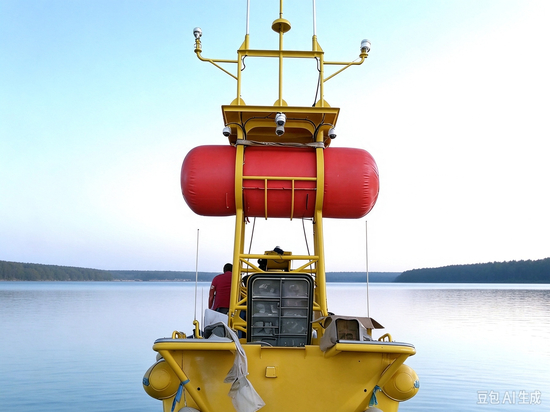
What is the self-righting system? Unveiling the "tumbler" technology of unmanned boats
What is the self-righting system? Unveiling the "tumbler" technology of unmanned boats
What is a self-righting system? Unveiling the "tumbler" technology of unmanned surface vessels.
Publication Date: January 15, 2024 | Views: 3,286 | Author: Hawen Technical Team
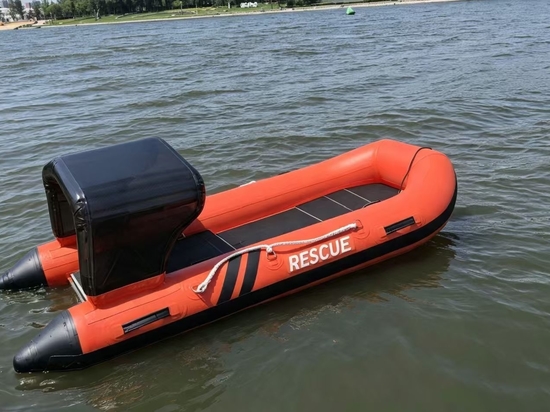
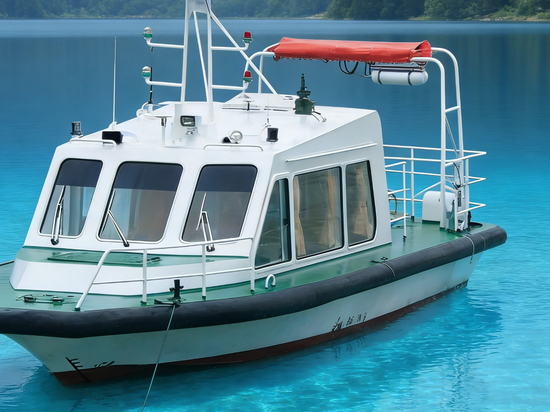
Introduction: During Typhoon Doksuri in 2023, a rescue unmanned boat belonging to a fire and rescue brigade in a certain city automatically righted itself within 5 seconds after capsizing in 4-meter waves, successfully rescuing 12 trapped people. This was thanks to the self-righting system. This article will provide an in-depth analysis of this key technology.
1. Why do lifeboats need a self-righting function?
The greatest risk traditional lifeboats face at sea is not water ingress, but capsizing. Statistics show that approximately 35% of equipment failures in maritime rescue missions stem from the inability to recover after capsizing, leading to:
• Rescue mission interrupted, delaying crucial rescue time.
• Engine damaged by water, equipment scrapped.
• Rescue workers were forced to enter the water to right the body, increasing the risk of injury or death.
• Completely incapable of operation under adverse sea conditions
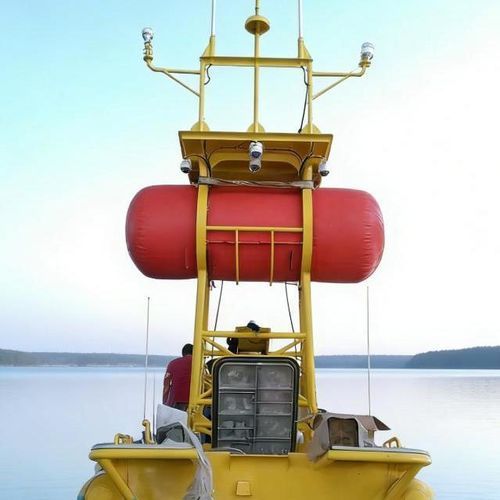
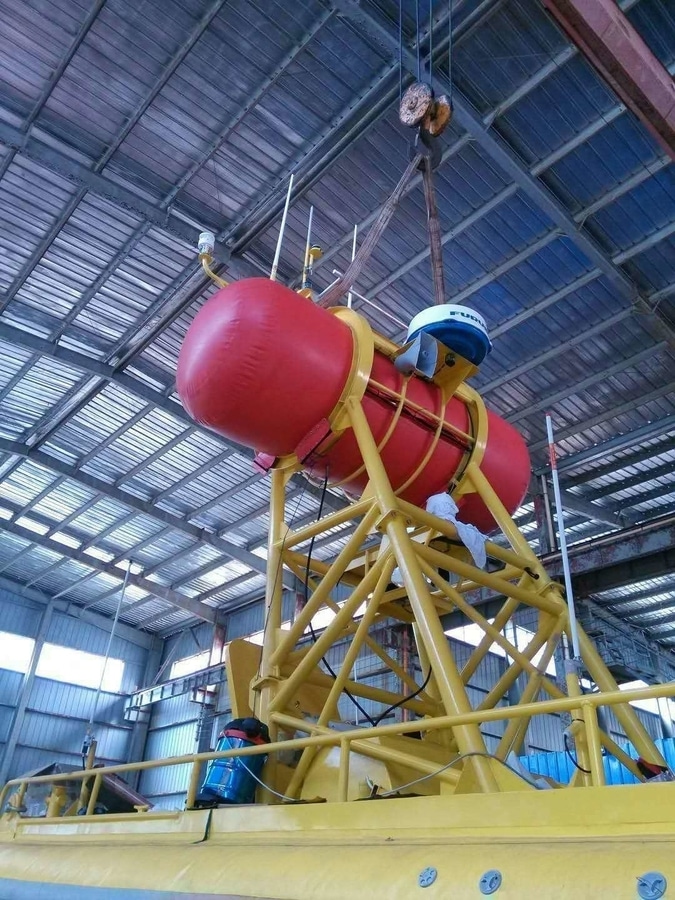
The Self-Righting System was developed to address this pain point. Self-Righting rescue unmanned surface vessels equipped with this system can automatically regain their upright position after capsizing, ensuring mission continuity.
II. The Three Major Technical Principles of the Self-Alignment System
1. Low center of gravity for stable design
Heavy equipment such as battery packs and motors are placed at the bottom of the hull, so that the overall center of gravity is 15-20cm lower than the center of buoyancy. This is similar to the principle of a roly-poly toy, where the hull naturally has a righting torque, so it can automatically return to its upright position even if it is tilted by external forces.
2. Retractable straightening wing mechanism
The hull is equipped with retractable righting wings on both sides, which are normally retracted to reduce drag. When the gyroscope detects a capsizing state (tilt angle > 90°), the righting wings automatically deploy, using buoyancy to generate a righting torque, and usually complete the 180° return to right position within 3-5 seconds.
3. Intelligent Sensing Control System
The system features a built-in 6-axis MEMS gyroscope that monitors the ship's attitude in real time, and uses AI algorithms to determine whether a righting procedure needs to be initiated. The system response time is less than 2 seconds, and it can distinguish between normal swaying and dangerous capsizing, preventing false triggering.
III. Key Performance Indicators of the Self-Alignment System
index
industry average
Harvin HV-2400 Standard
Time for rectification
10-15 seconds
≤5 seconds
Applicable sea conditions
Level 4 and below
Sea state 6
Continuous corrective ability
3-5 times
≥20 times
Success rate of conversion
85%
≥99%
IV. The Value of Self-Help in Different Rescue Scenarios
Scenario 1: Typhoon/Storm Surge Rescue
In winds of force 6 (wind speeds of 10.8-13.8 m/s), waves can reach heights of 3-4 meters, making it difficult for ordinary unmanned surface vessels (USVs) to operate. Self-righting rescue USVs, however, can immediately recover even if capsized by large waves and continue to perform search and rescue missions.
Scene 2: Complex waterways at night
Low visibility at night makes it difficult for operators to accurately assess sea conditions, increasing the risk of collisions and capsizing. The self-righting system provides "error tolerance," allowing for rapid recovery even in the event of operational errors.
Scenario 3: Rapids/Whirlpool Area
In areas with complex water flow, such as river estuaries, boats are easily capsized by turbulent currents. Self-righting capability ensures that equipment is not swept away or sunk by the current.
V. Five key points for selecting a self-righting rescue unmanned surface vessel
1. Review the righting test video: Request the manufacturer to provide actual test video recordings under sea state 6, not animated demonstrations.
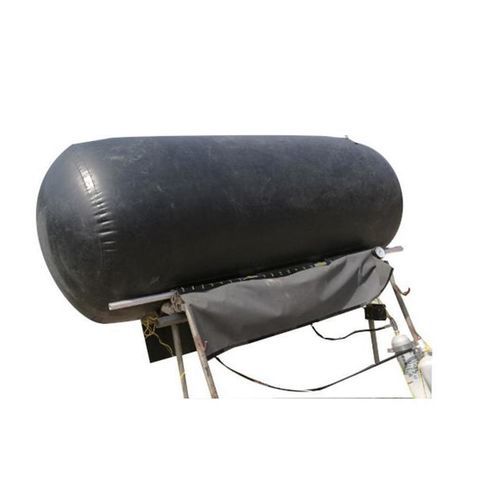
2. Understand the reliability of the straightening mechanism: Mechanical structures are superior to airbag-type mechanisms, as the latter are prone to aging and failure.
3. Confirm continuous righting capability: Support at least 10 consecutive rollover-righting cycles.
4. Check the sealing protection level: No water ingress during tipping, IP67 or higher protection.
5. Verify after-sales service capabilities: The centering mechanism is a precision component and requires regular maintenance.
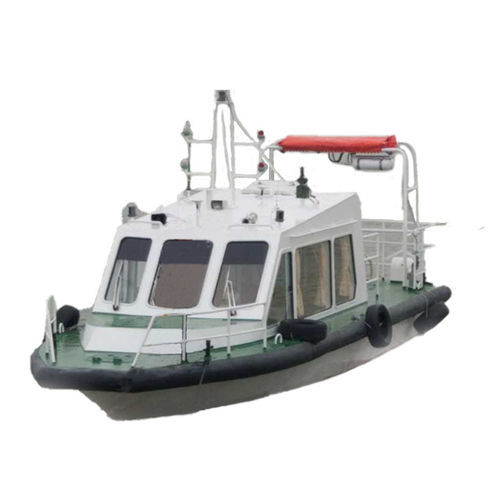
Harvin HV-2400 self-righting rescue unmanned surface vessel
Patented self-righting technology | Tested in sea state 6 | 99.9% success rate in righting the sea |
View product details →
VI. Future Development Trends
With advancements in materials technology and AI algorithms, the next generation of self-righting systems will possess predictive righting capabilities—actively adjusting attitude before capsizing to achieve "zero capsizing" operations. Haven Marine is developing a pre-stabilization system based on active hydrofoils, expected to be operational by 2025.
Related Reading
• 8 key differences between unmanned rescue boats and traditional lifebuoys
• Maritime Rescue Equipment Selection Guide: A Must-Read for Fire Departments
• Development Trends of Unmanned Maritime Systems Technology in 2024