#Product Trends
Self-Righting Tests and Safety Standards
Self-Righting Tests and Safety Standards
Introduction
The reliability of a self-righting system is ultimately proven by real capsize tests. This article explains the typical capsize-recovery test process, key safety standard points, and maintenance and annual inspection advice for self-righting rescue craft.
1. Capsize-Recovery Test Process
A typical test simulates capsize in safe waters and records trigger time, inflation time and recovery time. The self-righting equipment should be assessed against the agreed test plan for the specific hull, load and conditions. Record trigger, inflation and recovery times, then inspect propulsion, steering and compartment condition. Do not assume that one demonstration proves performance across all configurations.
Self-righting technology supports HVON's Water Rescue Solutions application and should be evaluated together with rescue craft and rescue equipment.
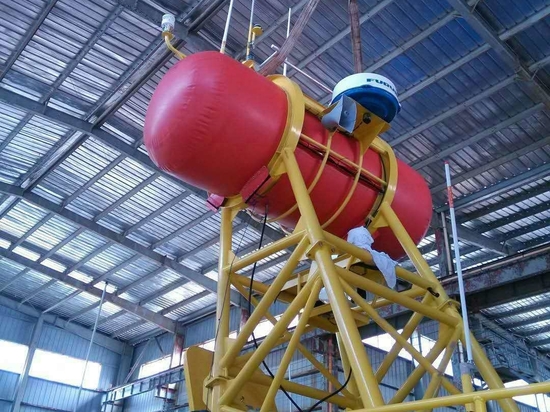
Self-righting airbag and gas cylinders - product illustration
Self-righting airbag and gas cylinder assembly. Source: the rapid-inflation self-righting product page. Product illustration, not a capsize test record.
2. Safety Standard Points
Key points include righting moment covering the hull center of gravity, gas cylinder pressure and airbag volume matching, trigger reliability after water ingress, and crew compartment sealing and escape design. Define the applicable regulations, standards and contract acceptance criteria before testing. Record water and weather conditions, loading, and crew protection. A single pass threshold cannot be assumed for every vessel type. Operators should also verify that the test vessel's payload and center of gravity represent real mission conditions, because weight distribution directly affects recovery performance.
3. Maintenance and Annual Inspection
Regularly check cylinder pressure, airbag condition, sensor sensitivity and line sealing. After any use in a capsize, have the cylinder refilled and retested by professionals, and set inspection and retest intervals according to the manufacturer instructions, duty cycle and applicable requirements.
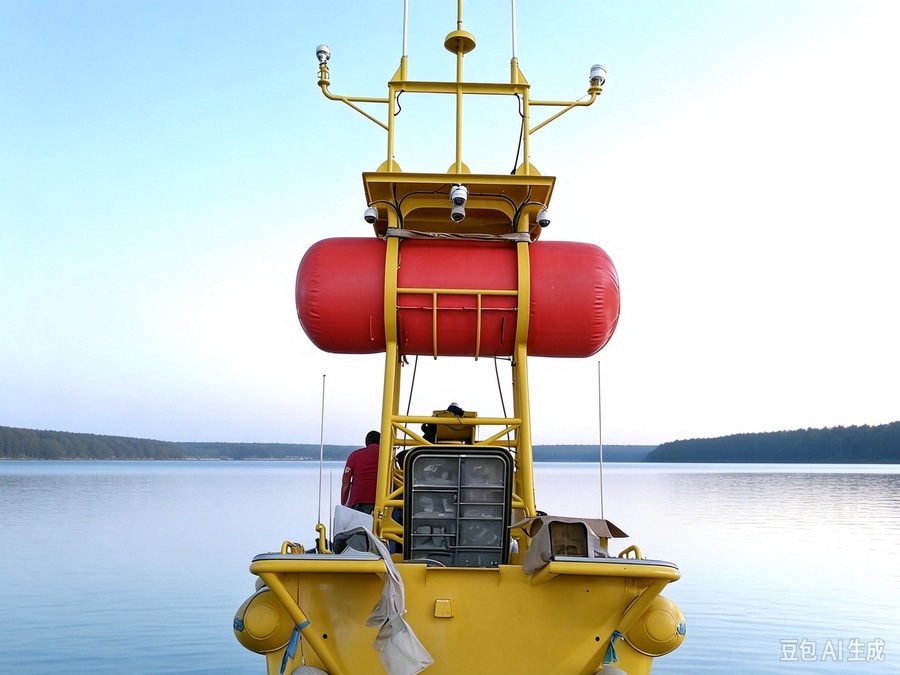
Self-righting system mounted on a vessel stern frame - installation illustration
Self-righting installation on a stern frame, showing the stowed airbag and gas cylinder. Source: the automatic-inflation self-righting product page.
Before a trial, inspect cylinders and triggering devices, establish a controlled test area and prepare rescue support. Keep continuous video and time records. After recovery, inspect the airbag, mountings, water ingress and electrical equipment. Repeatability under representative loading matters more than a single staged demonstration.
4. Selection Advice
Size the system for the actual hull, center of gravity, loaded condition and mission. Request test records for the proposed configuration and training for operators and maintenance staff. Performance claims should be tied to that test evidence.
For a new build or retrofit, also review available installation space, changes to vessel stability, maintenance access and the cost of restoring the system after deployment. If a project requires a named safety standard or declaration, ask for documents that cover the exact vessel model and configuration. A product brochure alone does not establish compliance.
Contact Us
Qingdao Hvon Boat Co., Ltd.
Tel: 18553259852
Email: [email protected]
Website: www.qdhvon.com
Related reading:
Self-Righting Rescue Boat Integration
Self-Righting System Selection Guide