#Industry News
Core Dimensions of Comfort-Oriented Design for Large-Scale Propulsion Control Handles
At present, the design of the comfort level for this professional equipment mainly takes into account the following aspects:
【Operational Ergonomics & Morphological Optimization】
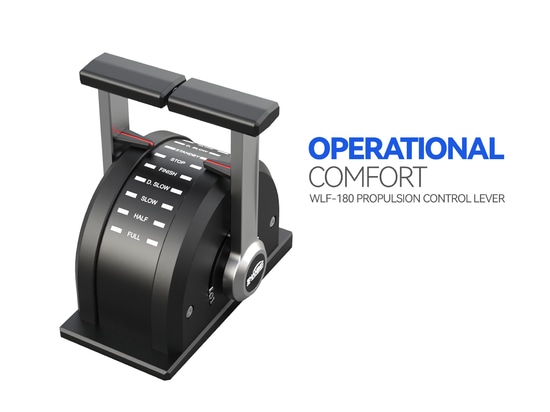
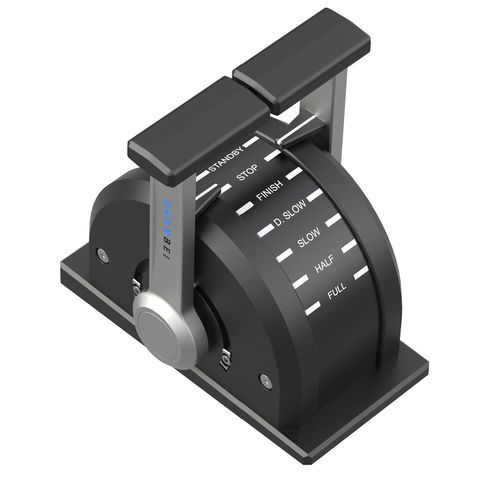
The contouring of the control lever shall strictly comply with the biomechanical characteristics of natural hand prehension, ensuring that both the wrist and elbow joints maintain ergonomic clearance angles under either seated or standing operating postures. The prevailing industry adoption of a 90 mm diameter cross-section is fundamentally intended to maximize palmar contact area, thereby redistributing grip compression forces to mitigate cumulative muscle fatigue during prolonged duty cycles.
【Haptic Feedback & Command Resolution】
The built-in adjustable damping mechanism serves as the critical determinant of tactile responsiveness, permitting incremental torque modulation in accordance with individual operator wrist-strength profiles, thus yielding a well-defined proprioceptive boundary throughout the deflection envelope. At the command input stage, a compound architecture combining rigid elastomeric push-buttons with metallic dome-switch contacts is predominantly employed, which generates distinctive travel strokes and crisp snap-action tactility—effectively preventing inadvertent actuation while ensuring unambiguous command verification.
【Material Selection & Environmental Resilience】
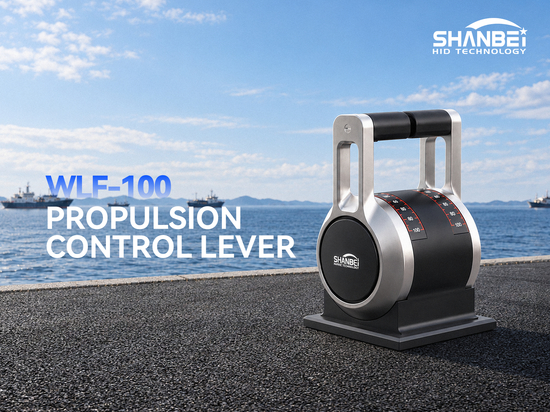
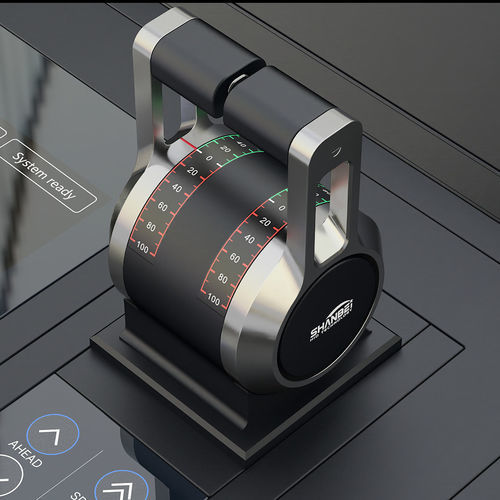
Given the aggressive operational environment characterized by elevated relative humidity and persistent saline aerosol within engine-room compartments, the primary structural housing is typically fabricated from anodized lightweight aluminum alloys to secure both mechanical robustness and long-term corrosion resistance. Conversely, the hand-gripping surfaces are cladded with textured synthetic elastomers, whose engineered micro-groove patterns sustain consistent static frictional coefficients even under lubricant-contaminated or moisture-laden conditions, thereby guaranteeing reliable manipulation integrity.
【Intelligent Human–Machine Interaction Trends】
Forward-looking design evolution emphasizes the augmentation of onboard information assimilation capabilities—exemplified by the integration of compact edge-mounted display units or capacitive touch-sensitive panels. Such provisions enable the forward placement of critical propulsion parameters (e.g., rudder-angle feedback, shaft-revolution status) directly onto the lever body, thereby reducing operator saccadic visual shifts between the console instrumentation and the manual control interface. This spatial data collocation ultimately enhances cognitive response agility and operational sequencing continuity.