#Product Trends
A Brief Overview of Applications of Marine Joystick-Type Products
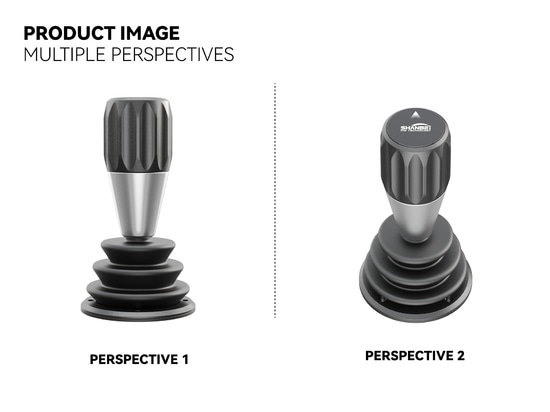
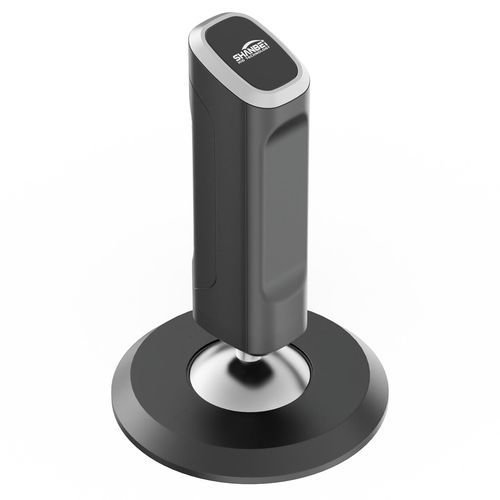
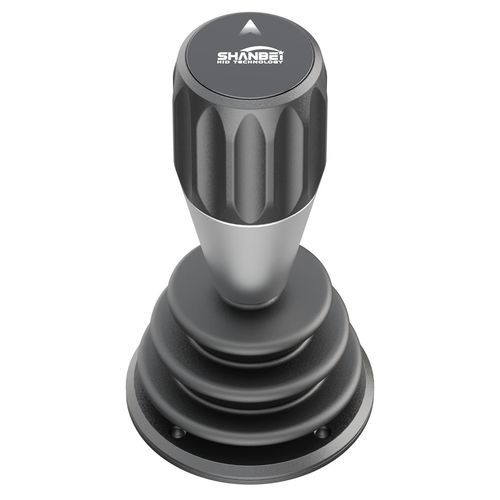
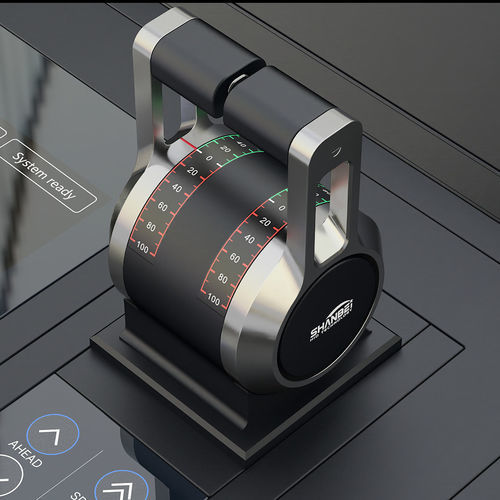
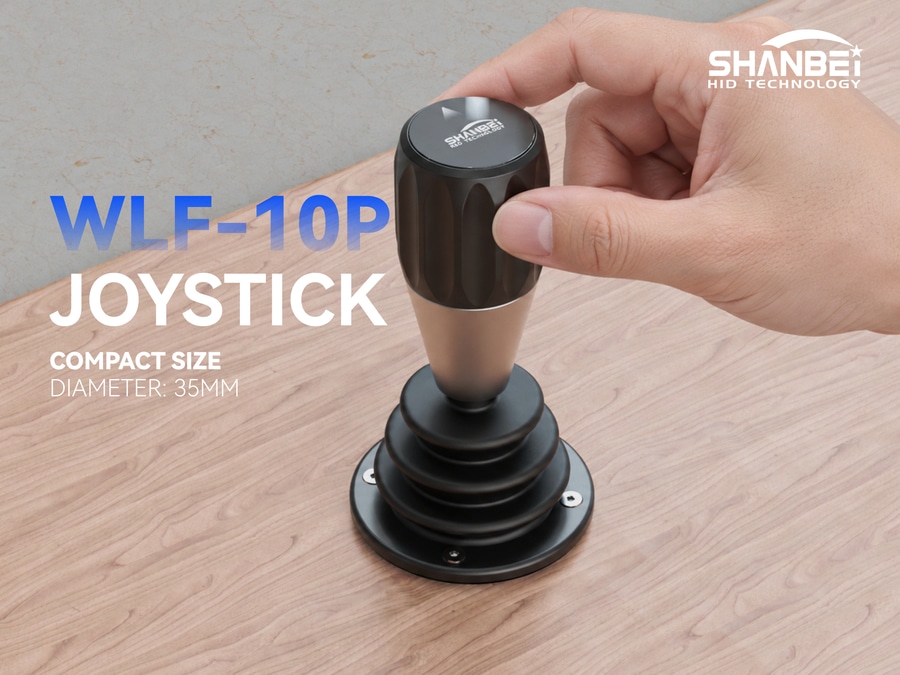
Marine joysticks are control input hardware converting motion commands into electrical signals. With controller thrust allocation, they enable berthing/unberthing, DP, and multi-thruster control, easing low-speed operations.
I. Product Positioning: A marine joystick is control input hardware, not a complete joystick control system. It converts surge, sway, and yaw commands into electrical signals, while the higher-level controller performs thrust allocation and actuator coordination. It does not directly drive thrusters; its analog output must be processed by a PLC, signal conditioning circuit, or dedicated controller before controlling the main engine, rudder, side thrusters, and azimuth thrusters.
II. Position in System Architecture: It is located at the command input layer and outputs commands in three degrees of freedom: surge, sway, and yaw. The controller decouples the signals and allocates thrust before driving the actuators. Potentiometer output accuracy is approximately 1%, 24 VDC, dust-proof and water-jet protected, suitable for bridge and engine control room (ECR) environments. Neutral detent is distinct, and damping of each axis is independently adjustable.
III. Typical Applications: Remote control stations; berthing/unberthing and low-speed manoeuvring, enabling lateral translation, pivot turns, and crabbing; manual DP mode for precise positioning in cable laying, drilling, and offshore wind installation; coordinated multi-thruster control on construction vessels; simulators and training to reproduce real-vessel feel.
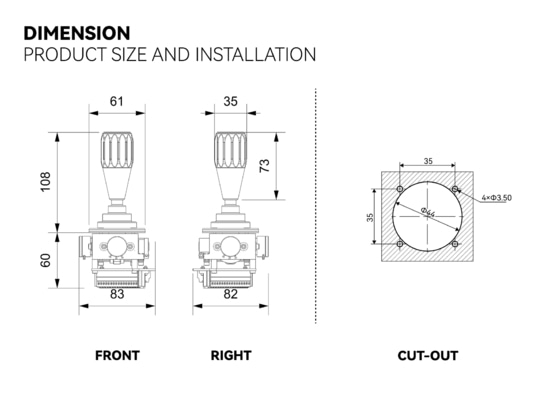
IV. Integration and Operation: Panel- or console-mounted; potentiometer analog output, expandable with CAN and 4–20 mA interfaces. Mode transfer must be interlocked, and the main control lever must be in neutral. Manual/auto status of each axis must be clear; during DP transfer, take over axis by axis. Each control station requires an independent emergency stop. It is mainly used for low-speed assistance in ports, quays, and narrow waters, and does not replace main engine remote control in open water.
V. Application Value: It provides motion command input in hardware form, with the upper-level system translating intention into actuation. It reduces the difficulty of berthing/unberthing and multi-thruster coordination, and is a reliable human-machine interface (HMI) node in ship automation, domestic substitution, and cost-control projects.